The Definitive Rare Object Authentication Guide: Scientific Methods, Professional Techniques, and Red Flags
Owning a rare object is exhilarating. Discovering that a dusty find might be an authentic antiquity transforms a simple possession into a piece of history. But with the global market flooded with sophisticated forgeries—some so convincing they have fooled museum curators for decades—the difference between a treasure and a trinket lies in authentication.
This comprehensive guide explores the professional methods used to authenticate rare objects, from non-destructive scientific analysis to the art of forensic provenance research. Whether you are evaluating a potential purchase, assessing a family heirloom, or simply curious about how experts separate genuine artifacts from clever fakes, this guide provides the essential knowledge to become a more discerning collector.
Part 1: The Multidisciplinary Approach – Why One Test Is Never Enough
Authenticating a rare object is rarely straightforward. As experts at the Harvard Art Museums discovered while studying a bronze statuette of Alexander the Great, even decades of analysis by art historians, conservators, and materials scientists may fail to produce a definitive consensus .
The Convergence of Evidence
Professional authentication relies on the convergence of multiple lines of evidence, not a single “magic bullet” test. Reputable dealers and museums consider four primary categories of evidence simultaneously:
| Evidence Category | What It Examines | Key Questions |
|---|---|---|
| Art Historical | Style, iconography, period characteristics | Does the object’s style match its claimed era and origin? |
| Technical | Manufacturing methods, tool marks, construction | Are the production techniques consistent with the period? |
| Scientific | Material composition, corrosion, dating | Do scientific tests confirm or contradict claimed age? |
| Provenance | Ownership history, documentation, exhibition records | Can the object’s path through history be traced? |
When multiple methods are employed but no consensus can be reached, as with Harvard’s Alexander Nelidow statuette, the object remains contested. This uncertainty is part of the field—authenticity is often a matter of probability, not absolute certainty .
The Problem of Subjective Criteria
Art historical analysis alone is rarely sufficient. Stylistic judgments can be highly subjective. The Alexander statuette was thought by some to be a Roman-period copy of a 4th-century BC original by Lysippos, while others attributed it to the Renaissance based on musculature comparisons. Without scientific evidence, the debate could not be resolved .
Part 2: Scientific Authentication Methods Explained
Modern technology has revolutionized the authentication of rare objects. Non-destructive techniques allow experts to analyze materials without damaging the objects themselves.
X-Ray Fluorescence (XRF) Spectrometry
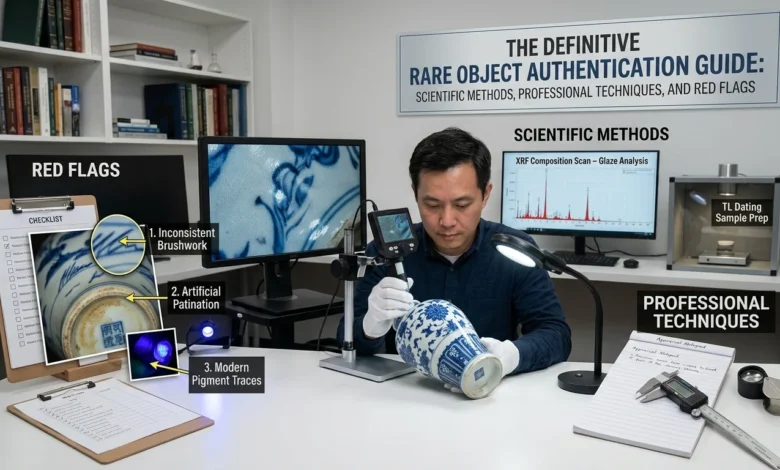
XRF is one of the most powerful tools for authenticating metal objects. The technique works by directing X-rays at an object, causing it to emit fluorescent light that reveals its elemental composition .
How It Works:
- Handheld or laboratory-based instruments direct X-rays at the object’s surface
- Different elements emit characteristic fluorescent signatures
- The resulting data reveals the alloy composition (percentages of copper, tin, zinc, lead, etc.)
What XRF Reveals:
- Whether the alloy matches known compositions from the claimed period
- Presence of modern elements (like high zinc content) that indicate recent manufacture
- Consistency between different parts of the same object
Real-World Application: French Gilt Bronzes
For decades, 18th-century Parisian gilt bronzes were widely counterfeited in the 19th and 20th centuries. Authentication was extremely challenging until the improved use of XRF. The Getty Museum led a consortium of institutions—including the Metropolitan Museum of Art, the Rijksmuseum, the British Museum, and the Louvre—to develop standardized reference materials called the CHARM (Cultural Heritage Alloy Reference Material) set .
Using portable handheld XRF instruments, researchers have performed over 1,300 compositional analyses on objects with known provenance. The data compiled to date has yielded considerable insight into the working methods of French bronze founders and proved highly valuable for authentication .
| Metal Type | Red Flags in XRF Analysis |
|---|---|
| Bronze (ancient) | Zinc content above trace levels (ancient bronzes are copper-tin alloys; zinc indicates brass, a later technology) |
| Silver (antique) | Lead content inconsistent with period smelting methods |
| Gold (ancient) | Uniform purity inconsistent with ancient refining limitations |
Lead Isotope Analysis
Lead isotope analysis is a more specialized technique that examines the specific “fingerprint” of lead within an object’s metal. Different ore sources worldwide have distinct isotopic signatures .
The Alexander Nelidow Case:
When researchers tested the Alexander statuette using lead isotope analysis, they found that its isotopic composition was distinct from ore sources believed to have been used in Graeco-Roman times. This finding called the object’s antiquity into question. However, without consensus on which ore sources were actually available and used in the period, even this sophisticated test could not provide a definitive answer .
Other Scientific Methods
| Method | Application | What It Detects |
|---|---|---|
| Thermoluminescence (TL) Dating | Ceramics (pottery, terracotta) | When clay was last fired (detects modern forgeries) |
| Radiocarbon Dating | Organic materials (wood, textile, bone) | Age of organic components (accurate within decades) |
| X-Radiography | Metal objects, paintings | Internal structure, hidden repairs, modern additions |
| Scanning Electron Microscopy (SEM-EDX) | Surface analysis at microscopic level | Corrosion patterns, manufacturing tool marks |
Part 3: Material-Specific Authentication Red Flags
Different categories of objects have distinct red flags that signal potential forgery or misattribution.
Metal Objects (Bronze, Silver, Gold)
The Alexander Nelidow case and other examples from Harvard’s collection reveal critical red flags for metal objects :
Zinc Content:
Ancient bronzes are copper-tin alloys. Zinc appears only as a trace element in genuine ancient pieces. A statuette containing over 5% zinc is a major red flag. One questionable piece in Harvard’s collection contained around 15% zinc—completely unlike other authentic Sardinian bronzes, of which only one out of 130 had more than 1% zinc .
Corrosion Patterns:
Genuine ancient bronzes develop characteristic corrosion layers over centuries of burial: typically a layer of red cuprite under green surface corrosion. Fakes may have thick but jumbled corrosion, lacking the usual layer structure. The Alexander statuette had patches of thick cuprite remaining, but the surface had been stripped and partially recarved in the late 19th century, complicating analysis .
Mold Lines:
Piece-mold lines—raised ridges along the exterior—are a feature one would not expect to find on Graeco-Roman bronzes. Their presence may indicate the object was cast from a mold taken from an existing statuette (an indirect cast), which is more characteristic of later reproduction techniques .
| Red Flag | What It Suggests |
|---|---|
| High zinc content (>1-2%) | Modern brass, not ancient bronze |
| Jumbled or missing corrosion layers | Artificially aged or cast from corroded original |
| Piece-mold lines on “ancient” piece | Indirect casting (modern technique) |
| Identical to multiple other examples | Modern copy from common mold |
Ceramics and Pottery
The Mark Test:
For ceramics, the location of maker’s marks is critical. Genuine antique pieces have marks under the glaze (applied before firing). Reproductions often have marks on top of the glaze (applied after firing) .
Glaze Characteristics:
- Authentic age produces crazing (fine cracks) with dark staining from dirt trapped over decades
- New pieces have clean crazing lines or no crazing at all
- Artificial aging can be detected under magnification
Paintings
Support Examination:
- Old linen canvas shows uneven weaving and darkening from age
- Wood panels develop age cracks and may show woodworm damage
- Modern stretchers (especially with staple marks) indicate recent origin
Paint Layer Analysis:
- Cross-section microscopy reveals layering consistent with period techniques
- Presence of pigments not available in the claimed era is definitive proof of forgery
Part 4: The Copy Problem – When Duplicates Indicate Deception
One of the most telling indicators of a fake is the existence of identical copies. As Harvard’s research revealed, some statuettes in their collection are modern copies—exact or only slightly adapted—of other statuettes .
The Souvenir Copy Problem
A statuette of the Dancing Faun from Pompeii in Harvard’s collection was probably made as a souvenir of the Grand Tour, not as an ancient artifact. Its corrosion pattern did not suggest long-term burial, and its alloy composition was inconsistent with ancient pieces. Close comparison with an authentic version from Pompeii in the Museo Archeologico Nazionale, Naples, confirmed its modern origin .
The Multiple Identicals Problem
A draped female figure in Harvard’s collection—identical to at least 4 and up to 11 other statuettes—raised immediate concerns. The piece lacked indications of corrosion from long-term burial and contained over 30% zinc. When multiple identical examples exist without clear provenance for any of them, authenticity becomes highly suspect .
| Question to Ask | Why It Matters |
|---|---|
| Is this object identical to others on the market? | Mass production suggests modern origin |
| Where were the other examples found? | Lack of archaeological context is suspicious |
| Which version is the “original” if multiple exist? | Uncertainty indicates possible forgery ring |
When Copies Are Not Fakes
Not all copies are forgeries. The Dancing Faun copy was a legitimate souvenir—it only became problematic when someone tried to sell it as an authentic antiquity. Similarly, aftercasts of famous statues were produced openly as replicas. The issue is not the copy itself but the claim of authenticity .
Part 5: The Art of Provenance Research
Provenance—the documented history of an object’s ownership—is one of the most powerful tools in authentication. A gap in provenance does not automatically indicate a fake, but it does raise questions that require investigation .
What Is Provenance?
Works of art can pass through many hands after leaving the artist’s studio. This chain of ownership typically includes transfers between the artist, dealers, collectors, and institutions. Gaps in provenance frequently occur due to a lack of records, but they can also indicate something more nefarious, such as theft or concealed property .
How Provenance Is Researched
The National Gallery of Art Library houses one of the most extensive collections of US and European art auction catalogs in North America—more than 100,000 publications from the 18th century to the present. Some catalogs are annotated with prices and even the names of buyers and sellers. Many 20th-century and almost all 21st-century catalogs include final price lists .
Key Provenance Research Resources:
| Resource Type | What It Provides |
|---|---|
| Auction catalogs (annotated) | Names of buyers and sellers, sale prices |
| Dealer records | Transaction history, previous owners |
| Exhibition histories | Museum and gallery provenance |
| Collection marks and stamps | Evidence of past ownership (bookplates, inventory numbers) |
The Collector’s Mark
Collectors throughout history have left evidence of ownership—bookplates in books, stamps on prints, inventory numbers on furniture. These marks, when documented, provide crucial links in the provenance chain. The National Gallery of Art mounted an exhibition titled “The Art of Sleuthing: Evidence of Collectors Who Made Their Mark,” featuring fascinating stories of collectors including actress Greta Garbo .
Part 6: Grading and Condition Assessment
Authentication is only part of the equation. Even a genuine antique’s value depends heavily on its condition. The Royal Mint explains that “by fully understanding the coin-grading system and knowing how to store and properly care for your coins, you can increase the value of your historic collection” .
Coin Grading Terminology
The British grading system uses descriptive terms:
| Grade | Description |
|---|---|
| Uncirculated | No wear; as originally struck |
| Extremely Fine | Light wear on highest points only |
| Very Fine | Moderate wear but all details clear |
| Fine | Considerable wear but major features visible |
| Good | Heavy wear; some details may be indistinct |
Condition Issues Specific to Authentication
Bag marks—surface nicks on coins from contact with other coins in a mint bag—are common on large gold or silver pieces and do not indicate inauthenticity. However, wear patterns that are inconsistent with the object’s claimed age or use history are red flags .
Part 7: The Ultimate Authority Problem – When Experts Disagree
Perhaps the most important lesson from authentication studies is that there is no ultimate authority. The Alexander Nelidow statuette has been examined and debated by art historians, conservators, and materials scientists for decades with no clear consensus reached .
Why Consensus Is Elusive
- Different analytical methods can produce conflicting results
- Scientific testing requires interpretation, which can vary
- Stylistic attributions are inherently subjective
- Provenance can be forged or fabricated
As the Harvard researchers note, the question remains: “Is there ever going to be a point where one can look at objects and say, definitively, this one is fake and this one is an authentic antiquity?”
What This Means for Collectors
- Accept uncertainty as inherent in the field
- Buy from reputable dealers who offer authenticity guarantees
- Obtain written appraisals from qualified professionals
- Build relationships with experts in your collecting area
Part 8: Practical Authentication Checklist for Collectors
Before purchasing a rare object, run through this professional-grade checklist.
Pre-Purchase Investigation
Provenance Verification:
- Request documented ownership history
- Verify chain of ownership where possible
- Check for gaps that coincide with known thefts or conflicts
- Look for exhibition records and publication citations
Physical Examination:
- Inspect with magnification (10x loupe minimum)
- Check for signs of artificial aging (uniform wear, sanding marks)
- Examine all surfaces, including back and bottom
- Note any restoration or repair evidence
Material Analysis (when possible):
- Request scientific testing documentation
- Verify alloy composition matches period
- Check corrosion patterns for authenticity
Red Flags That Should Stop a Purchase
| Red Flag | Action Required |
|---|---|
| Seller cannot provide provenance | Do not buy without independent verification |
| Object is identical to multiple others | Investigate source; likely mass-produced |
| Price is “too good to be true” | Suspicious; forgeries are priced to move quickly |
| Seller refuses testing or inspection | Walk away; legitimate sellers accommodate serious buyers |
| No documentation of restoration | Assume hidden repairs; adjust value accordingly |
Part 9: Conservation-Grade Authentication Resources
For serious collectors and professionals, the following resources provide authoritative guidance.
Reference Standards
The CHARM (Cultural Heritage Alloy Reference Material) set, developed by the Getty Museum and partner institutions, provides certified reference standards for XRF analysis of historic copper alloys. This has been critical for making analytical results comparable across institutions .
Authentication Services
Reputable coin dealers offer authentication services, certifying historic coins as genuine or not based on expert analysis . For other categories, look for specialists accredited by professional organizations.
Published Guides
For organic artifacts (plant materials like wood, textiles, basketry), the Getty Conservation Institute’s “The Conservation of Artifacts Made from Plant Materials” provides detailed information on identification and deterioration patterns .
Frequently Asked Questions (FAQ)
Q1: What is the most reliable scientific test for authenticating ancient metal objects?
A: No single test is definitive. X-Ray Fluorescence (XRF) is highly valuable for determining alloy composition, but lead isotope analysis, corrosion examination, and manufacturing technique analysis should all be considered together. The Alexander Nelidow case demonstrates that even multiple tests may not produce consensus .
Q2: How can I tell if a bronze statuette is genuinely ancient or a modern reproduction?
A: Look for these indicators: genuine ancient bronzes typically have low zinc content (trace amounts only), characteristic corrosion layers (red cuprite under green), and casting methods consistent with the period. Red flags include high zinc content (>1-2%), jumbled corrosion patterns, and piece-mold lines that suggest indirect casting .
Q3: What does XRF testing reveal about an object?
A: XRF (X-Ray Fluorescence) reveals the elemental composition of an object’s surface. For metals, it shows the percentages of copper, tin, zinc, lead, and other elements. This data can indicate whether the alloy matches known compositions from the claimed period or contains modern elements that suggest recent manufacture .
Q4: Why is provenance so important for authentication?
A: Provenance—documented ownership history—provides a chain of custody that can verify an object’s age and origin. Gaps in provenance do not necessarily indicate a fake, but they can suggest theft or concealed property. Well-documented provenance significantly increases both confidence and value .
Q5: Can an object be authentic even if scientific tests raise questions?
A: Yes. The Alexander Nelidow statuette has lead isotope composition inconsistent with known ancient ore sources, yet many experts still believe it may be ancient. Scientific testing requires interpretation, and our knowledge of ancient materials and methods is incomplete. Authentication remains a probabilistic judgment .
Q6: What are the most common red flags for forged ceramics?
A: For ceramics, the location of the maker’s mark is critical—genuine antique marks are under the glaze (applied before firing), while reproductions often have marks on top of the glaze. Other red flags include decal decorations instead of hand-painting, incorrect weight, and crazing lines that are clean rather than stained with age .
Q7: How do I verify a dealer’s authentication claims?
A: Request documentation for all claims. Ask for scientific testing reports, provenance records, and exhibition histories. Reputable dealers expect these requests and can provide verification. Be wary of dealers who refuse to share documentation or offer only verbal assurances.
Q8: What is the CHARM set and why does it matter?
A: The CHARM (Cultural Heritage Alloy Reference Material) set is a collection of certified bronze and brass reference standards developed by the Getty Museum and partner institutions. It allows museums worldwide to calibrate their XRF instruments identically, making analytical results comparable—a critical advance for authentication science .
Q9: Can identical copies ever be authentic antiques?
A: Rarely. If an object is identical to multiple other examples without a clear “original” and documented provenance for each, it is likely a modern copy. Harvard’s research found that statuettes identical to 4-11 other examples almost always proved to be modern forgeries when examined scientifically .
Q10: Should I have every potential purchase professionally authenticated?
A: For high-value purchases (over $1,000), professional authentication is strongly recommended. For lower-value items, learn the basic red flags and buy from reputable sources. Remember that authentication costs can exceed the value of modestly priced objects—use professional services selectively.