When Barbarian Hordes Met the Roman Divide
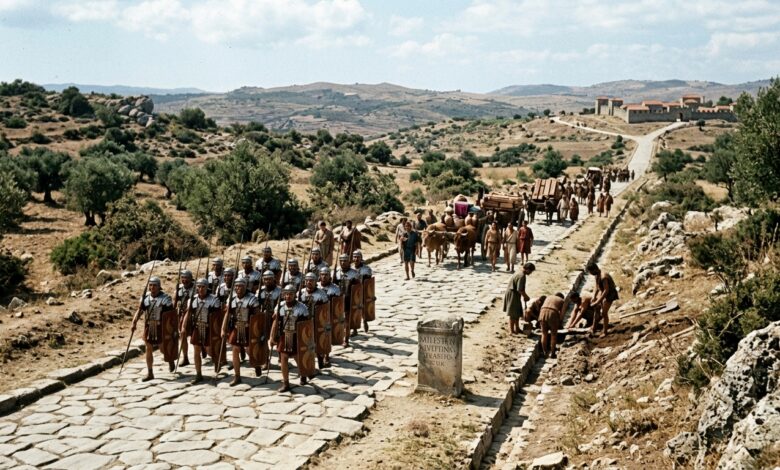
The Fall of the Western Roman Empire
The Western Roman Empire, which had been a dominant force in Europe for centuries, began its decline in the 3rd century AD. The empire’s decline was a gradual process that was influenced by a combination of internal and external factors. This article will explore the events and circumstances that led to the fall of the Western Roman Empire.
Internal Factors: Corruption, Military Decline, and Economic Instability
The Western Roman Empire‘s internal factors contributed significantly to its decline. Corruption was rampant among the Roman elite, with many officials and military leaders more interested in accumulating wealth and power than in serving the empire. The Roman military, which had once been a powerful and efficient force, began to decline in the 3rd century AD. The empire’s economy was also plagued by inflation, which eroded the value of money and reduced the purchasing power of citizens.
The corruption was so widespread that it even affected the imperial family. Emperor Commodus, who ruled from 180 to 192 AD, was notorious for his extravagance and lack of interest in governance. He was eventually assassinated, but his reign set a precedent for future emperors who were more interested in their own power and wealth than in serving the empire.
The Division of the Empire
In 285 AD, Emperor Diocletian divided the Roman Empire into two parts: the Western Roman Empire and the Eastern Roman Empire, also known as the Byzantine Empire. This division was intended to make the empire more manageable, but it ultimately led to a weakening of the Western Roman Empire. The division created a power vacuum that was exploited by neighboring tribes and barbarian groups.
The division of the empire also led to a decline in the Roman military’s morale and effectiveness. The Western Roman Empire’s military was no match for the powerful and organized barbarian groups that began to invade the empire’s borders.
External Factors: Barbarian Invasions and Economic Pressure
The Western Roman Empire’s external factors also contributed to its decline. The empire’s borders were constantly under threat from barbarian groups, who were attracted by the empire’s wealth and stability. The Huns, in particular, were a major threat, and their invasions of the empire’s borders weakened the Western Roman Empire’s defenses.
The barbarian groups also put pressure on the Roman economy, which was already weakened by internal factors. The constant need to pay off barbarian groups to prevent invasions further weakened the Roman economy.
The Battle of Adrianople
In 378 AD, the Western Roman Empire suffered a major defeat at the hands of the Goths at the Battle of Adrianople. The battle was a turning point in the empire’s history, as it marked a shift in power from the Roman Empire to the barbarian groups.
The Battle of Adrianople was a significant defeat for the Western Roman Empire, as it resulted in the loss of thousands of Roman soldiers and the destruction of the empire’s military equipment. The battle also marked a shift in power from the Roman Empire to the barbarian groups, who would eventually go on to conquer the empire.
The Final Years of the Western Roman Empire
The Western Roman Empire’s final years were marked by a series of barbarian invasions and the eventual collapse of the empire’s government. The empire’s capital, Rome, was sacked by the Visigoths in 410 AD, and the empire‘s last emperor, Romulus Augustus, was deposed in 476 AD.
The final years of the Western Roman Empire were marked by a series of barbarian invasions and the eventual collapse of the empire’s government. The empire’s capital, Rome, was sacked by the Visigoths in 410 AD, and the empire’s last emperor, Romulus Augustus, was deposed in 476 AD.
The Legacy of the Western Roman Empire
The Western Roman Empire’s legacy is a complex and multifaceted one. The empire’s legacy can be seen in the modern-day languages, cultures, and governments of Europe. The empire’s law and governance systems also had a lasting impact on the development of Western civilization.
The Western Roman Empire’s legacy is a testament to the empire’s enduring influence on Western civilization. The empire’s law and governance systems, in particular, had a lasting impact on the development of Western civilization.
FAQ
What were the main causes of the Western Roman Empire’s decline?
The main causes of the Western Roman Empire’s decline were internal factors such as corruption, military decline, and economic instability, as well as external factors such as barbarian invasions and economic pressure.
Who were the most notable emperors of the Western Roman Empire?
The most notable emperors of the Western Roman Empire include Emperor Commodus, Emperor Diocletian, and Emperor Constantine.
What was the significance of the Battle of Adrianople?
The Battle of Adrianople was a turning point in the Western Roman Empire’s history, as it marked a shift in power from the Roman Empire to the barbarian groups.
What was the impact of the Western Roman Empire’s collapse on Western civilization?
The impact of the Western Roman Empire’s collapse on Western civilization was significant, as it led to a shift in power from the Roman Empire to the barbarian groups, who would eventually go on to shape the course of Western history.
What were the major barbarian groups that invaded the Western Roman Empire?
The major barbarian groups that invaded the Western Roman Empire included the Huns, the Goths, and the Visigoths.
When did the Western Roman Empire officially come to an end?
The Western Roman Empire officially came to an end in 476 AD, when the empire’s last emperor, Romulus Augustus, was deposed.