Unraveling the Mysteries of a 2,500-Year-Old Empire: The Forgotten Rise of Ancient Persia
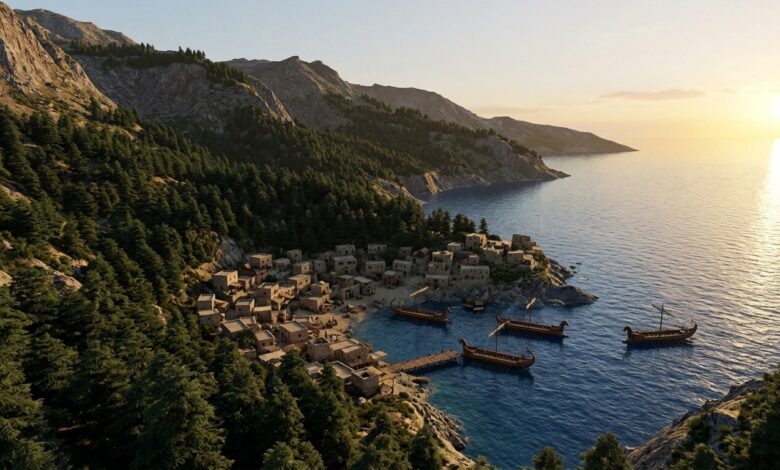
The History of Ancient Persia
A Land of Great Empires and Cultural Achievements
Ancient Persia, which corresponds to modern-day Iran, is a region steeped in history and rich in cultural heritage. For over 2,000 years, the Persian Empire, with its capital in Persepolis, was a dominant force in the ancient world. From the Achaemenid dynasty to the Sassanian Empire, the region’s ruling dynasties left an indelible mark on the course of human history.
The Achaemenid Empire (550-330 BCE)
Founded by Cyrus the Great in 559 BCE, the Achaemenid Empire was one of the largest empires of the ancient world. Its vast territories stretched from modern-day Iran to Egypt, and from Anatolia (modern-day Turkey) to the Indus Valley (modern-day Pakistan). The Achaemenids were known for their tolerance and acceptance of different cultures, and their empire was a melting pot of various ethnicities and religions.
- Cyrus the Great, who conquered Babylon and incorporated it into his empire, is often credited with being the founder of human rights.
- The Achaemenids developed a sophisticated system of governance, with a centralized administration and a network of roads and communication systems.
- The Achaemenids were also known for their impressive architectural achievements, including the construction of the Persepolis palace complex and the Pasargadae palace.
The Royal Road and its Significance
The Royal Road, built during the Achaemenid period, was a 1,500-mile-long road that connected the capital city of Persepolis to the city of Sardis in modern-day Turkey. This road was an engineering marvel, built to facilitate the rapid movement of troops and goods across the empire. Its significance extends beyond its practical uses, as it also served as a symbol of the Achaemenid Empire’s vast reach and its ability to connect distant territories.
The Alexander the Great Invasion (330-323 BCE)
In 330 BCE, Alexander the Great, the king of Macedon, conquered the Achaemenid Empire, marking the beginning of the Hellenistic period in the region. Alexander’s conquests led to the spread of Greek culture and language throughout the ancient world, and his legacy continued to shape the course of history in the region for centuries to come.
- Alexander’s conquests led to the establishment of over 70 cities, including Persepolis, which was renamed Alexandria in his honor.
- The Hellenistic period saw the rise of new cities and the development of a distinct Greek-Persian culture, which would have a lasting impact on the region’s art, architecture, and literature.
The Sassanian Empire (224-651 CE)
The Sassanian Empire, which rose to power in the 3rd century CE, was a powerful and influential dynasty that played a significant role in the region’s history. The Sassanians were known for their impressive military achievements, their extensive trade networks, and their rich cultural heritage.
The Sassanians were also known for their sophisticated system of governance, which included a network of officials, a complex tax system, and a well-organized system of roads and communication.
The Decline of the Sassanian Empire and the Rise of Islam
The Sassanian Empire declined in the 7th century CE, following a series of devastating wars with the Arab Empire. The Arab conquest of Persia, which took place in 651 CE, marked the beginning of a new era in the region’s history. The rise of Islam, which began in the 7th century CE, had a profound impact on the region’s culture, language, and politics.
The Legacy of Ancient Persia
The legacy of ancient Persia extends far beyond its impressive architectural achievements and its sophisticated system of governance. The region’s rich cultural heritage, which includes its literature, art, and architecture, continues to inspire and influence artists, writers, and scholars to this day.
The Importance of Preserving Ancient Persia’s Cultural Heritage
The importance of preserving ancient Persia’s cultural heritage cannot be overstated. From the magnificent palaces of Persepolis to the intricate carvings of the Pasargadae palace, the region’s cultural achievements are a testament to the ingenuity and creativity of its people.
Conclusion
The history of ancient Persia is a rich and complex tapestry, woven from the threads of various dynasties, empires, and cultures. From the Achaemenid Empire to the Sassanian Empire, the region’s ruling dynasties left an indelible mark on the course of human history. The legacy of ancient Persia continues to inspire and influence artists, writers, and scholars to this day, and its cultural achievements remain a testament to the ingenuity and creativity of its people.
FAQs
What was the significance of the Royal Road?
The Royal Road was a 1,500-mile-long road that connected the capital city of Persepolis to the city of Sardis in modern-day Turkey. Its significance extends beyond its practical uses, as it also served as a symbol of the Achaemenid Empire’s vast reach and its ability to connect distant territories.
What was the impact of Alexander the Great’s conquests on the region?
Alexander’s conquests led to the spread of Greek culture and language throughout the ancient world, and his legacy continued to shape the course of history in the region for centuries to come. The Hellenistic period saw the rise of new cities and the development of a distinct Greek-Persian culture, which would have a lasting impact on the region’s art, architecture, and literature.
What was the significance of the Sassanian Empire?
The Sassanian Empire was a powerful and influential dynasty that played a significant role in the region’s history. The Sassanians were known for their impressive military achievements, their extensive trade networks, and their rich cultural heritage. The Sassanians were also known for their sophisticated system of governance, which included a network of officials, a complex tax system, and a well-organized system of roads and communication.
What is the importance of preserving ancient Persia’s cultural heritage?
The importance of preserving ancient Persia’s cultural heritage cannot be overstated. From the magnificent palaces of Persepolis to the intricate carvings of the Pasargadae palace, the region’s cultural achievements are a testament to the ingenuity and creativity of its people.